Atmosphere/Hydrosphere Project
Evaporation
Evaporation is the process by which water changes from a iquid or gas to water vapor. Evaporation in the atmosphere is a crucial step in the water cycle. Water on Earth's surface will evaporate into the atmosphere as energy liquid water absorbs energy. Water molecules during this phase are free-flowing and in no fixed position. Once energy is added to water by heat from the sun, the bonds between the water molecules gain kinetic energy, or energy in motion. Once water vapor reaches the atmosphere, various types of clouds can form.
The Water Cycle

Transpiration
Transpiration is the process by which moisture is carried through plants from roots to small pores on the underside of leaves, where it changes to vapor and is released to the atmosphere. Essentially, transpiration is evaporation of water from plant leaves. Transpiration also includes a process called guttation, which is the loss of water in liquid form from the uninjured leaf or stem of the plant, often through the stomata.Transpiration accounts for approximately 10% of all evaporating water.


Condensation
Condensation is the process by which water vapor in the air is changed into liquid water. Condensation is crucial to the water cycle because it is responsible for the formation of clouds. However, it is also known for the formation of dew and fog. For condensation to occur, water vapor in the atmosphere changes to liquid water. Air pressure and temperature have a big part in this process. Since warmer air can hold more water vapor than colder air, the water vapor condenses as the temperature decreases.

Precipitation
Precipitation is water released from clouds in the form of rain, freezing rain, sleet, snow, or hail. It is the primary connection in the water cycle that provides for the delivery of atmospheric water to the Earth. The most common type of precipitation is rain. Drizzle consists of very fine water drops that fall slowly and close together. However, raindrops are larger and fall fast and further apart.
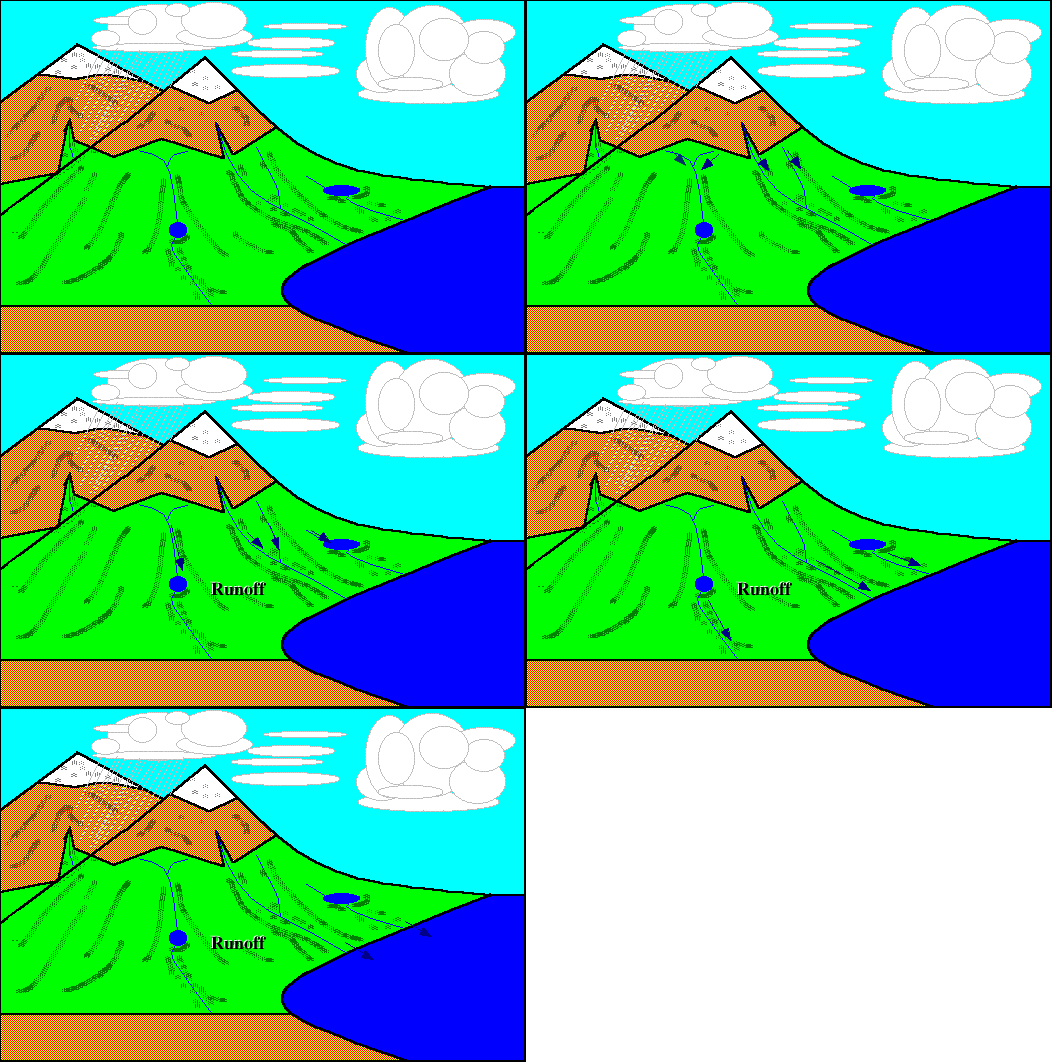
Runoff
Runoff is the movement of landwater to the oceans, chiefly in the form of rivers, lakes, and streams. Runoff consists of precipitation that neither evaporates, transpires nor penetrates the surface to become groundwater. Even the smallest streams are connected to larger rivers that carry billions of gallons of water into oceans worldwide.

Infiltration
Infiltration occurs when water soaks into the soil from the ground level. The water travels underground and moves between the soil and rocks. Some of the water will be soaked up by roots to help plants grow. The plant's leaves eventually release the water into the air through the plant s pores. Some of this water keeps moving down into groundwater, a level that is filled with water.